
Parking Garage Cost in 2026: Cost Drivers & Tips to Save Maximum
Parking Garage = $25,000 and $55,000 per stall
Large Multi-Level Projects = $10M–$50M+
As a commercial contractor, you must know the headache of dealing with parking garages that come with many exposed and hidden expenses. You must know both to keep the project within resources and make a good profit. Let’s start with the parking garages’ cost affecting factors!
Factors That Affect the Parking Garage Construction Cost
Many contractors think that it is only a game of concrete and rebar. However, the reality has many additions, including project foundation, project location, labor charges, drainage system, parking efficiency, etc. Continue reading to get details on each.
Foundation
Proper load transferring is all about the foundation of the parking garage. If the site is ready for construction, you can go with a shallow system; they keep the budget and schedule low. However, if the land involves weak soil, high water tables, and heavy mult-level structures, go with deeper systems. And obviously, they cost more than the shallow ones.
Additionally, foundation comes in different types. As a contractor, you must be focused on “What will stay stable without creating change orders later?” rather than “What is cheapest?” See the table for cost data for different parking garage foundation options.
| Foundation Type | Cost Range |
| Concrete Slab-on-Grade (Monolithic Slab) | $12–$20/sf |
| Reinforced Concrete Footings and Piers | $18–$30/sf |
| Raft or Mat Foundation | $25–$40/sf |
| Pile Foundations | $35–$60/sf |
| Gravel Pad | $4–$8/sf |
Which Type is Best for What?
- Use a monolithic slab when the subgrade is predictable and the load is light.
- Footings and piers are best for column grids, especially when you want a simple superstructure above them.
- Mat foundations spread the load across a wide area, which helps when the soil cannot take point loads well.
- Use piles when the ground below is unreliable or when the garage is on a complex urban site.
- Gravel pads are cheap, but they suit temporary or very light-duty parking. You must not choose them for a durable multi-level garage.
Material Used
The material you choose will decide the parking garage construction speed, labor charges, future maintenance, and durability. When professionals compare materials, precast mostly stands in the first position due to its time efficiency. According to PCI, precast reduces site work and cuts time on site, which helps when weather and labor availability threaten the schedule.
Second comes cast-in-place; it gets highlighted when teams focus on design flexibility. It gives more shaping freedom, but it mostly takes longer and demands more field labor. You can also go with steel as it opens up larger bays, but it needs additional work to get protection from fire and corrosion, which obviously increases the parking garage cost.
Additionally, you have options of fiber reinforcements that help with crack control, and wood that comes under the cap of specialized projects and mostly don’t fit the standard urban parking garages.
See the table below for the cost range of each material.
| Material | Cost Range |
| Precast Concrete | $75–$110/sf |
| Cast-in-Place Concrete | $80–$125/sf |
| Structural Steel | $95–$145/sf |
| Fiber-Reinforced Concrete | $72–$112/sf |
| Wood | $60–$95/sf |
Project Location
Labor wages, freight, seismic design, weather exposure, and permitting intensity are the location-related cost drivers in a parking garage construction project. In simple words, when you move from California to NYC, and NYC to Washington, and so on, parking garage costs fluctuate.
To deal with all cost-drivers correctly, you should rely on RSMeans’ City Cost Index; it compares a standardized project across cities using material, labor, and equipment differences.
| Location | Cost Range (per sf) |
| California | $105–$145 |
| NYC | $135–$190 |
| Washington | $100–$140 |
| Florida | $82–$112 |
| Austin | $90–$124 |
| Alaska | $120–$170 |
| Texas | $85–$118 |
Labor Expenses
In a parking garage construction, different teams are involved. Some do construction; some get involved in framing; some focus on electricity work. All come with different wages. See the table below for cost data.
| Labor | Targeted Jobs | Wage Range |
| Construction Laborer | Site prep, material handling and cleanup | $28–$42/hr |
| Carpenter/Formwork Lead | Forms, embeds, edge work | $35–$58/hr |
| Rebar/Ironworker | Reinforcement placement, structural steel | $38–$65/hr |
| Concrete Finisher | Slab finish, deck repairs, patching | $32–$50/hr |
| Equipment Operator | Cranes, lifts, loaders, forklifts | $40–$65/hr |
| Electrician | Lighting, controls, EV infrastructure | $45–$75/hr |
| Layout/Survey Tech | Control lines, elevation, verification | $38–$60/hr |
Drainage System
You can’t ignore the drainage system in a parking garage construction. Water management means you are taking precautions to avoid corrosion, staining, slip risk and long-term repair expenses. This also means you are planning for the protection of joints and reliable performance of the deck in winter and storm events.
As a contractor, you know that drainage comes in different types; all cost differently, depending on their specifications. See the table for cost data with the best use case.
| Drainage Type | Best Use | Cost Range |
| Trench Drains (Linear Drains) | Drive aisles, ramps and long runoff lines | $35–$95/lf |
| Slot Drains | Cleaner look, high-traffic pedestrian zones | $60–$150/lf |
| Spot Drains (Point Drains) | Localized low points and small catch areas | $150–$400 each |
| Catch Basins | Larger runoff collection points | $900–$2,500 each |
| Gravity Drainage Systems | Sites with clean fall and simple discharge | $2.50–$6.50/sf drained |
| Permeable Pavers | Surface lots and stormwater-sensitive sites | $12–$24/sf |
Parking Efficiency
Parking space means a lot here. The more square footage you lose to ramps, aisles, and base geometry, the more each stall costs. Structured garages usually plan around 300–350 gross square feet per vehicle, while surface lots often need more. That gap is where contractors find savings without touching quality.
The most efficient layouts usually use 90-degree stalls with double-loaded aisles. That arrangement packs in more cars per floor plate than narrow angled layouts. 60-degree layouts can help on sites that need easier traffic flow, but they sacrifice density.
Total Parking Space
The stall itself is only part of the cost of a parking garage construction. Teams pay for circulation, columns, ramps, exits, code clearances, lighting, and drainage. That is why a simple 162-square-foot stall can turn into 300-plus gross square feet once the garage becomes operational.
See the table below for the cost range of different spaces.
| Space Type | Area Size | Cost Range |
| Standard Space | 9′ × 18′ = 162 sf | $27,000–$39,000 |
| Compact Space | 8′ × 16′ = 128 sf | $24,000–$36,000 |
| Large/SUV/Truck Space | 10′ × 20′ = 200 sf | $31,000–$45,000 |
| Parallel Space | 8.5′ × 23′ = 195.5 sf | $29,000–$43,000 |
| Accessible Space (ADA) | 8′ × 18′ + aisle | $30,000–$46,000 |
Parking Below Grade
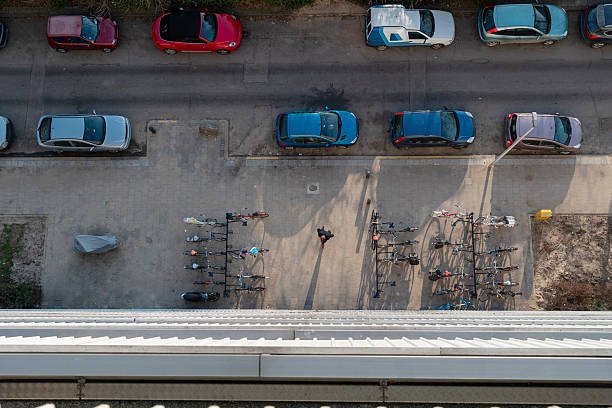
Below-grade parking always costs more. Why? Because they include excavation, shoring, waterproofing, drainage, ventilation, fire protection, and many times dewatering. This project also comes with many soil surprises and utility conflicts, hence cost more.
In 2026, the underground parking garage cost between $150–$300 per sf band, or $60,000–$120,000 per space. For an exact budget, you must outsource garage construction cost estimating services from the industry experts.
Let’s Get In Touch
Get Your Garage Cost Estimates Done Right!
Permits and Compliance
Permits and compliance add engineering, submittals, inspections, and sometimes redesign. ADA layout, fire access, zoning, stormwater, and structural review all shape the final cost of permits for parking garage projects.
According to a recent report, on accessible parking alone, the federal baseline calls for 96-inch minimum widths, 60-inch access aisles, proper slopes, and clear signage. And this specification changes from location to location. As a contractor, you should budget time for permit coordination, because approvals can affect sequencing a lot.
Number of Parking Levels
More levels do not just mean more concrete. They also mean more ramps, more vertical circulation, more stairs, more elevators, more fire protection, and more complexity in mobilization. This means each level adds operations overhead and increases the number of details. That is why level count matters so much in parking garage estimating.
| Levels | Cost Range |
| 1 Level | $15,000–$21,000 |
| 2 Levels | $19,000–$28,000 |
| 3–4 Levels | $22,000–$35,000 |
| 5+ Levels | $28,000–$45,000 |
Note: Single-level parking garages are cheaper, but they cover more land. Multi-level garages cost more per space, but they use the site more efficiently.
Architectural Facade Treatment
Facade treatment changes the garage from a plain utility box into a visible building structure. When it comes to contractors’ work, they play with material cost and installation complexity. The more custom the facade, the more you spend on attachment systems, detailing, maintenance access, and wind-resistance design.
Furthermore, the facade treatment cost fluctuates depending on the face type; see the table below for cost data.
| Facade Type | Cost Range |
| Open Screen/No Added Facade | $0–$8/sf of facade area |
| Perforated Metal/Louvers | $12–$25/sf of facade area |
| Precast Decorative Panels | $18–$35/sf of facade area |
| Glass/Hybrid Screen Systems | $25–$45/sf of facade area |
| Kinetic Custom Facade | $35–$65/sf of facade area |
What Drives Facade Cost?
- Material choice
- Attachment method
- Pattern complexity
- Maintenance access
- Wind loading
- Fire and code requirements
- Finish selection
Parking Lot Striping and Markings
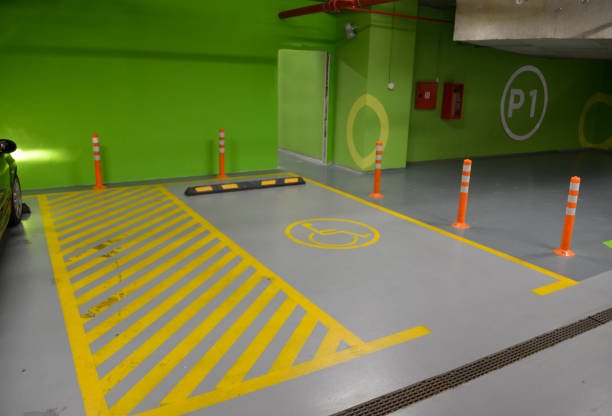
Many contractors miss striping, taking it as a minor expense. But it can alone shake the complete parking garage cost. In garages, clean striping matters due to the visibility factor. Also, parking lot markings guide traffic, define stalls, protect pedestrians, and set the tone for the whole deck.
For the cost data of different parking lot striping and marking, see the table below.
| Marking Item | Cost Range |
| Standard Stall Striping | $5–$12 per stall |
| ADA Stall Striping and Symbols | $18–$40 per stall |
| Directional Arrows | $20–$45 each |
| Stop Bars/Crosswalks | $35–$120 each |
| Fire Lane Lettering | $1.50–$4.00 per lf |
| Full Deck Marking Package | $0.20–$0.60/sf |
Technology & Additional Program Elements
Technology is no longer optional in parking garages. Project owners now demand EV-ready stalls, access control, cameras, smart lighting, and sometimes license plate recognition.
Every added program element affects electrical rough-in, conduit runs, distribution capacity, and controls integration. That is where small upgrades add cost to the project total. See the table below for the cost of each addition.
| Program Element | Cost Range |
| EV-Ready Conduit | $300–$1,000 per space |
| Level 2 EV Charger Installed | $3,500–$15,000 per port |
| DC Fast Charger | $18,000–$350,000+ per port |
| Access Control Gate | $15,000–$60,000 per entrance |
| Camera / Security Package | $10,000–$50,000 per garage |
| Smart Lighting Controls | $2–$6/sf of lit area |
Let’s Get In Touch
Get Your Garage Cost Estimates Done Right!
How to Estimate the Parking Garage Cost?
Follow the process below step-by-step.
Determine Parking Garage Project Scope and Requirements.
Note down the owner’s actual requirements. First ask, “Is this retail, office, municipal, hotel, or mixed-use parking?” Then note the parking turnover, security needs, and whether the garage must support EV charging or future expansion.
Define the Capacity of the Parking Garage.
Many contractors count just floors, but you also must count spaces. Why? Because a 200-space garage and a 500-space garage are not the same project, even if both use concrete. So, ask “How many compact spaces are allowed?”, “How many ADA stalls does the site need?”, and “ Does the layout support a realistic circulation pattern?”
Determine the Structure Type of the Parking Garage.
Choose one among precast, cast-in-place, steel, or a hybrid system early. Remember that this decision will affect labor, schedule, span lengths, and maintenance. So, make a smart choice smartly, considering the specifications of each (already mentioned above).
Assess Site Conditions
Now test the ground. Factor in soil bearing, groundwater, access for cranes, shoring needs, utility conflicts, and demolition during this phase of early assessment.
Calculate Gross Square Footage of the Parking Garage.
Now use this formula:
Gross Square Footage (GSF) = Number of Spaces × Gross SF per Space
For structured garages, a useful planning figure is 300–350 gross square feet per vehicle. That covers the stall, aisles, ramps, stairs, and circulation.
Once you have GSF, multiply it by your chosen 2026 cost per square foot, then add soft costs and contingency.
Estimate Hard Costs.
In a parking garage project, hard costs include the actual building work, such as foundations, structure, drainage, MEP, fire protection, waterproofing, striping, and facade. Use the right system rate, then layer in site-specific adders.
Suggestion: Avoid treating all garages like a flat slab; otherwise, you will underprice or overpromise the bid, which ultimately affects your margin and credibility.
Estimate Soft Costs.
Soft costs cover design, engineering, permits, legal, financing, and parking garage project management. They fall around 15%–20% of the construction cost, and they can run higher on complicated jobs.
Factor in Contingencies.
Now work on contingency for unknowns. Soil surprises, utility conflicts, weather delays, material escalation, and permit comments all affect the project totally silently. On garage projects, contingency is more essential because the site and compliance risks are mostly higher than in other projects. So, do add this buffer, 5-10%, to your project total budget.
Compare with Industry Ratios.
Remember that a garage estimate should make sense against common ratios. If your total per-space number falls far below the market band, check your project scope. If it is far above it, check your assumptions. In 2026, a realistic structured-garage benchmark usually falls around $25,000–$55,000 per space above grade and much higher below grade.
Tips for Contractors: How to Maximize Margin in a Parking Garage Construction?
Now, come to the main point: your profit. You can only make the good one by controlling parking garage construction expenses smartly; this does not mean compromising on the quality.
Continue reading to explore tips for reduced spending and maximum margin.
- Opt for precast concrete. Why? Because precast reduces site labor and accelerates erection, which lowers the general conditions and weather risk.
- Utilize efficient layouts. Do you know which is the best option? 90-degree, double-loaded layouts mostly capture the best density.
- Maximize space with double loading. This way, you can get more stalls per floor plate and better revenue per square foot.
- Implement value engineering to reduce cost in the design phase.
- Cut rework and waste by focusing on standard details and repeatable bay sizes; they keep field mistakes down.
- Standardize designs. How? Use the same stall module, column grid, and deck details across floors.
- Always choose reliable materials, like precast concrete, corrosion-resistant reinforcement, and durable joint systems.
- Optimize lighting since efficient LED layouts reduce operating cost and improve safety.
- Tighten subcontractor agreements. Ensure clear scope language to eliminate project scope confusion.
- Leverage technology for precision and accuracy in numbers. You can use BIM, estimating software, and digital takeoff tools to reduce quantity miscalculations.
How Do Professional Contractors Get Precise & Accurate Parking Garage Estimates?
They outsource estimation jobs when the project gets too detailed to estimate. Never take it as your weak point since it is a smart strategy for risk control. You know that parking garages have too many cost levers for a rough internal allowance to hold up through bid time. A specialist estimator can tighten quantities, localize labor and material rates, and catch scope gaps before they hit the bid.
Outsourcing becomes more beneficial when your job includes foundation uncertainty, a complex structural system, facade treatment, EV infrastructure, or below-grade work. In addition, estimating experts help with parking garage value engineering, alternates, and bid leveling. For contractors, the benefit is simple: better numbers, fewer surprises, stronger margin protection, and less time wasted struggling with takeoffs.
Benefit from Precise & Accurate Estimates at Design & Bids!
Design And Bids helps contractors win parking garage contracts with sharper, faster, construction-ready estimates. If you need garage estimating services that hold up under real bid pressure, our team can support takeoffs, cost breakdowns, and scope checks that cut guesswork, protecting your margin.
Our Estimating Strategy, Your Bid Win. Let’s begin!
Commonly Asked Questions
What is marking efficiency?
Marking efficiency means how effectively striping and layout use the available floor or lot area. Better marking efficiency packs in more usable stalls, improves traffic flow, and reduces wasted circulation space. In garages, it often starts with a simple, repeatable stall module.
How long does it take to construct a parking garage?
Most parking garages take several months to more than a year, depending on size, site access, and structure type. The precast usually shortens the schedule. However, underground or highly customized projects usually take longer because excavation, waterproofing, and inspections add time.
What kind of concrete is used in parking garages?
The right concrete choice depends on span, speed, and maintenance goals. Contractors usually use reinforced concrete for cast-in-place garages and precast concrete for faster erection. Both work well when designed for traffic loads, freeze-thaw exposure, and moisture protection.
What is the hard cost in parking garage construction?
Hard cost means the direct construction cost of the garage itself. It includes labor, materials, equipment, structure, drainage, electrical, lighting, and finishes. It does not include design fees, financing, legal work, or other soft costs.
