
How To Accurately Figure Cubic Yard Measurements For Your Projects?
To accurately figure cubic yard measurements, multiply length × width × height (in feet) and divide by 27. This simple formula converts any space into cubic yards, the standard unit for ordering bulk materials like concrete, gravel, soil, and mulch.
Whether you’re pouring a driveway, backfilling a retaining wall, or spreading mulch across a garden bed, getting this number right is what separates a smooth project from one plagued by shortages, overspending, or wasted material sitting in your driveway. Even a small measurement error can throw off your entire order, delay your timeline, or inflate your budget.
According to NIST Handbook 44, Appendix C, General Tables of Units of Measurement (2026 edition), a cubic yard is a standardised U.S. customary unit of volume equal to 27 cubic feet, the same conversion factor used throughout this guide.
What Is A Cubic Yard?
A cubic yard is a unit of volume equal to a cube measuring 3 feet on each side, 3 ft long, 3 ft wide, and 3 ft tall. It’s the standard measurement contractors and suppliers use for ordering bulk materials like concrete, dirt, sand, and gravel, since these materials are sold by volume rather than weight. One cubic yard equals 27 cubic feet, making it a practical middle-ground unit for large-scale projects where cubic feet would be too small and cubic meters aren’t standard in the U.S. construction industry.
How Do You Calculate the Cubic Yard Formula (Length × Width × Height ÷ 27)?
The formula itself is simple, but understanding why it works makes it much easier to apply correctly to any project:
Cubic Yards = (Length × Width × Height) ÷ 27
Here’s the logic behind it. When you multiply length, width, and height, all measured in feet, you get a volume in cubic feet, not cubic yards. Since 1 cubic yard equals 27 cubic feet, dividing your result by 27 converts it into the unit your supplier uses.
Step-by-step:
- Measure length, width, and height in feet. If you have measurements in inches, convert them to feet first (inches ÷ 12).
- Multiply all three dimensions together to get the volume in cubic feet.
- Divide that number by 27 to get cubic yards.
Quick example:
Say you’re pouring a concrete pad that’s 10 feet long, 8 feet wide, and 0.5 feet deep (6 inches).
10 × 8 × 0.5 = 40 cubic feet
40 ÷ 27 = 1.48 cubic yards
That’s the exact amount of concrete you’d need to order. Keep this formula in mind as you go; it’s the foundation for every calculation coming up, whether you’re working with straight rectangular spaces or trickier shapes like circles and irregular lots.
Cubic Yard vs Cubic Feet vs Square Yard(Avoiding the Common Mix-Up)
One of the most common ordering mistakes happens when these three units get confused. They sound similar, but they measure completely different things, and mixing them up can throw off your entire material order.
| Unit | What It Measures | Dimensions | Common Use |
| Square Yard | Area (2D — flat surface) | 3 ft × 3 ft (9 sq ft) | Flooring, sod, carpet, paving |
| Cubic Feet | Volume (3D) | 1 ft × 1 ft × 1 ft | Small material quantities, bagged products |
| Cubic Yard | Volume (3D) | 3 ft × 3 ft × 3 ft (27 cu ft) | Concrete, soil, gravel, mulch (bulk orders) |
Why Is This Table Necessary To Understand?
If you calculate the area of your project in square yards but then order material by the cubic yard without factoring in depth, you’ll either run short or over-order. Always confirm whether your supplier is quoting area (square yards) or volume (cubic yards) before placing an order because it’s one of the most common and costly mix-ups in material planning.
How To Measure Cubic Yards Step-by-Step Explained?
To measure cubic yards step by step, mark your project area with stakes, record the length and width, then measure the depth in feet before applying the formula. Getting this right starts with the right tools and a consistent method, especially on U.S. job sites, where suppliers often won’t accept returns for over-ordered material. Here’s how to do it correctly, whether you’re working with flat ground or a sloped, uneven lot.
Gather The Right Tools
You’ll need a tape measure or measuring wheel, wooden stakes, mason’s string, a line level or laser level, a calculator, and something to record numbers on (notepad or phone). For larger commercial sites, a laser distance meter significantly speeds up the process.
Mark And Measure The Length And Width
Use stakes to mark the corners of your project area, then run a string line between them to keep your measurements straight. Record the length and width in feet; this defines the footprint of your project regardless of what’s happening with the depth.
Measure The Depth Or Height
For flat, level ground, measure straight down from the surface to your target depth (for example, 4 inches for a concrete slab or 6 inches for a gravel base). Convert inches to feet by dividing by 12.
Handle Sloped Or Uneven Ground
This is where most DIYers and even some contractors get it wrong. On sloped or uneven terrain, a single depth measurement won’t give you an accurate volume. Instead:
- Break the area into sections. Divide the sloped area into smaller, more manageable rectangular or triangular segments where the slope is relatively consistent.
- Take multiple depth readings. Measure depth at several points across the slope (start, middle, end) and average them, or measure each segment separately.
- Use a string line and a line level. Stretch a level string from the highest point of the area to the lowest point. Measure the vertical drop at intervals along the string to accurately calculate the average depth.
- Calculate each section independently. Find the cubic yardage for each segment using the standard formula, then add all the results together for your total.
Account For Compaction And Sub-Base Depth
U.S. contractors typically build in extra depth for base material (like gravel or crushed stone) beneath concrete or pavers, since sub-base material compacts once compacted with a plate compactor. If your project spec calls for a 4-inch compacted base, order slightly more loose material; compaction can reduce volume by 10–20% depending on the material.
Double-Check Before Ordering
Recalculate your numbers once, and if the project is large or commercial, consider having a second person verify measurements. Many U.S. suppliers sell concrete and aggregate in set increments (quarter-yard or half-yard minimums), so confirm rounding rules with your supplier before finalizing your order. Accurate figures like these also help contractors win more bids by keeping estimates tight and credible.
What’s The Method Of Cubic Yard Calculation for Rectangular, Circular, And Irregular Shapes?
Cubic yard calculations change slightly depending on the shape of your project, such as rectangular, circular, or irregular. Rectangular spaces use length × width × height, circular spaces use the cylinder formula with radius, and irregular shapes require breaking the area into smaller sections before adding the totals together.
Here’s how U.S. contractors and DIYers handle each shape on real job sites.
Rectangular Spaces
This covers most American residential and commercial projects, such as driveways, patios, foundation footings, and slab pours. The formula stays straightforward:
Cubic Yards = (Length × Width × Height) ÷ 27
Example: A concrete patio measuring 15 ft long, 12 ft wide, and 4 inches (0.33 ft) deep:
15 × 12 × 0.33 = 59.4 cubic feet
59.4 ÷ 27 = 2.2 cubic yards
Circular Spaces
Circular projects like round fire pits, tree wells, or cylindrical footings for deck posts use the cylinder volume formula, since a circular space essentially forms a short cylinder:
Cubic Yards = (π × r² × Height) ÷ 27
Where r is the radius (half the diameter) in feet, and π ≈ 3.14159.
Example: A round fire pit base with a 4 ft diameter (2 ft radius) and 6 inches (0.5 ft) deep:
3.14159 × (2 × 2) × 0.5 = 6.28 cubic feet
6.28 ÷ 27 = 0.23 cubic yards
Most U.S. suppliers won’t sell less than a quarter-yard, so you’d round up and confirm the minimum order with your supplier.
Irregular Shapes
Irregular lots are common with backyard landscaping, curved garden beds, or L-shaped foundations that don’t fit a single formula. Instead, U.S. estimators use a method called sectioning, which is standard practice on both residential and commercial takeoffs:
- Divide the space into regular shapes. Break the irregular area into rectangles, triangles, or circles that approximate the actual footprint.
- Calculate each section separately using the appropriate formula (rectangular or circular) above.
- Add all section volumes together to get your total cubic yardage.
Example: An L-shaped garden bed can be split into two rectangles, one 8 ft × 4 ft and another 5 ft × 3 ft, both 6 inches deep. Calculate each section’s cubic yards individually, then sum them for the total material needed.
For highly irregular or sloped commercial sites, many U.S. contractors also use grading software or a laser scanner to model the area digitally and automatically calculate volume, but the sectioning method works reliably by hand for most residential jobs.
Let’s Get In Touch
Contact The Team And Get Accurate Estimates
At Affordable Rates!
How Far Does A Cubic Yard Actually Go? (Material Coverage Chart)
One cubic yard covers 324 square feet at a 1-inch depth, and coverage decreases as depth increases. Use the formula coverage (sq ft) = 324 ÷ depth in inches to calculate any material at any thickness. Here is the table that can help you understand how much material each depth covers.
| Material | 1″ Depth | 2″ Depth | 3″ Depth | 4″ Depth | 6″ Depth |
| Mulch | 324 sq ft | 162 sq ft | 108 sq ft | 81 sq ft | 54 sq ft |
| Topsoil / Compost | 324 sq ft | 162 sq ft | 108 sq ft | 81 sq ft | 54 sq ft |
| Gravel / Crushed Stone | 324 sq ft | 162 sq ft | 108 sq ft | 81 sq ft | 54 sq ft |
| Concrete | — | — | — | 81 sq ft | 54 sq ft |
Cubic Yards To Weight: How Much Does A Cubic Yard Weigh By Material?
A cubic yard’s weight depends entirely on the material, ranging from around 400 lbs for dry mulch to over 4,000 lbs for concrete and gravel, since density, not volume, determines weight. This property, known as ‘bulk density,’ is a standard soil-science measurement tracked by agencies such as the USDA Natural Resources Conservation Service (NRCS), which studies soil composition and density as part of its national soil survey work
| Material | Approx. Weight per Cubic Yard |
| Mulch (dry) | 400–500 lbs |
| Mulch (wet) | 600–800 lbs |
| Topsoil | 2,000–2,200 lbs |
| Compost | 1,000–1,500 lbs |
| Sand | 2,500–3,000 lbs |
| Gravel / Crushed Stone | 2,700–3,000 lbs |
| Concrete (poured | 3,900–4,050 lbs |
What Do Real Cubic Yard Calculations Look Like For A Driveway, Retaining Wall, Or Garden Bed?
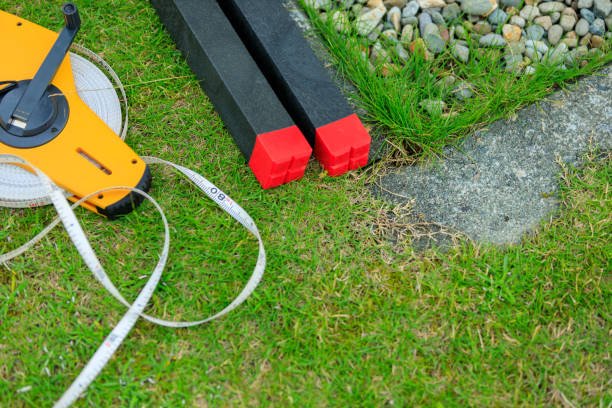
Real project examples make cubic yard calculations easier to apply: a driveway needs roughly 13 to 15 cubic yards of gravel for a base, or a garden bed project typically needs 1 to 5 cubic yards, depending on size and depth.
Driveway
Here is an example that shows how to calculate the driveway. A typical residential driveway measuring 60 ft long by 12 ft wide with a 6-inch compacted gravel base:
60 × 12 × 0.5 = 360 cubic feet
360 ÷ 27 = 13.3 cubic yards of gravel
Add a 10% buffer for compaction and uneven subgrade, bringing the order to roughly 14.6 cubic yards.
Retaining Wall Backfill
Let’s make it clear with an example. Suppose a retaining wall running 20 ft long, with a 2 ft wide backfill zone and 4 ft average depth behind the wall:
20 × 2 × 4 = 160 cubic feet
160 ÷ 27 = 5.9 cubic yards of backfill material (typically gravel or crushed stone for drainage)
Retaining wall backfill almost always uses free-draining aggregate rather than native soil, since proper drainage behind the wall prevents pressure buildup and structural failure.
Garden Bed (Topsoil or Compost)
Let’s walk through a sample calculation. Suppose a raised garden bed measuring 10 ft × 4 ft, filled to a depth of 1 ft (12 inches):
10 × 4 × 1 = 40 cubic feet
40 ÷ 27 = 1.5 cubic yards of topsoil or garden blend
For smaller beds like this, many suppliers sell topsoil in half-yard or bagged increments, so confirm minimum order sizes before finalizing your purchase.
Why Should You Add A Buffer When Ordering Material?
You should add a buffer of 5–15% when ordering material because real job sites rarely match perfect math; uneven subgrade, compaction, spillage, and cutting waste all consume extra material that your base calculation doesn’t account for.
Why Does The Buffer Exist?
Cubic yard formulas assume a flat, uniform space, but real sites rarely match that. Ground settles unevenly, forms shift during pours, and material gets lost in handling. Without a buffer, you risk running short mid-project, often meaning a costly short-load fee or a stalled job waiting on a second delivery. For a deeper look at building this kind of contingency into your budget, check out our construction cost estimation guide.
How Much Buffer To Add, By Project Type?
For Simple rectangular pours (patios, slabs), add 5% to cover minor spillage and rounding. For driveways or curved layouts, add 10% to account for irregular edges and subgrade variation. If it is Irregular shapes (stairs, curved beds, custom footprints), consider 10–15%, since sectioning multiple shapes together compounds small measurement errors. In loose materials like gravel or soil, add 10% to account for compaction after delivery, since loose volume settles once it’s spread and packed.
Where This Fits Into Your Budget
This buffer isn’t just a measuring safeguard; it should be built into your overall project budget from the start, not added as an afterthought once you’re short on site. Planning for it early, during the building estimation phase, keeps your material costs predictable and avoids the scramble (and markup) that comes with last-minute reorders.
A Practical Rule Of Thumb
Round your final number up to the nearest quarter or half yard after applying your buffer, since most suppliers won’t sell in smaller fractional increments. It’s far cheaper to have a small amount of leftover material than to pay for a rushed, partial-load delivery to finish the job.
Common Mistakes to Avoid
- Many people plug depth measurements directly into the formula in inches instead of converting to feet first, which throws the entire calculation off by a factor of twelve.
- Ordering only enough material for the finished surface depth, without adding extra for sub-base compaction, is a common oversight on driveways and patios.
- Taking a single depth measurement on a sloped or uneven lot and applying it across the entire project area produces inaccurate results.
- Relying on a single person’s measurements without a second check is risky on large residential or commercial jobs, where even small errors compound across a bigger footprint. Getting a second set of eyes on the numbers before they go into your design and bid documents is a simple safeguard worth the extra time.
- Assuming a project doesn’t require a permit, particularly for retaining walls, structural slabs, or major grading work, can lead to fines, forced removal, or costly rework.
Let’s Get In Touch
Contact The Team And Get Accurate Estimates
At Affordable Rates!
Conclusion
Accurately measuring cubic yards comes down to one simple formula: length × width × depth (in feet), divided by 27. Breaking irregular areas into smaller sections and adding a 5-10% buffer for waste or settling helps ensure you order the right amount every time. Whether you rely on an online calculator or calculate by hand, understanding this process protects you from costly overordering or frustrating shortages. From garden beds to driveways, mastering cubic yard measurements leads to smarter budgeting and smoother project planning. Take the extra few minutes to measure carefully because accurate numbers today mean a stress-free project tomorrow.
Frequently Asked Questions
What is a cubic yard, and how is it different from a square yard?
A cubic yard measures volume (length × width × height), while a square yard measures only area (length × width). Cubic yards are used for materials like soil, gravel, or concrete, whereas square yards are used for flat surfaces like flooring or carpet.
How many cubic feet are in a cubic yard?
There are 27 cubic feet in one cubic yard (3 ft × 3 ft × 3 ft). This is why you divide your cubic feet total by 27 to get the cubic yard measurement.
What happens if I underestimate or overestimate my material needs?
Underestimating leads to project delays and extra delivery trips, while overestimating wastes money on unused material. Adding a 5-10% buffer to your calculation helps avoid both issues.
What tools do I need to measure cubic yards manually?
You’ll need a tape measure or measuring wheel, a calculator, and a notepad to record dimensions. For uneven or sloped areas, a level or stakes with string can help ensure accurate depth measurements.
Does the cubic yard calculation change based on the material (soil vs gravel vs mulch)?
The core formula stays the same regardless of material, but recommended depth varies; typically, it needs 2-3 inches, while gravel or soil may require 4-6 inches. Always adjust your depth input based on the material’s purpose.
