

Industrial Construction Cost Estimation: Challenges and Best Practices
Do you ever face budget overruns during your industrial construction project? They may not be accidental; instead, they were flawed from day one.
Industrial constructions involved significant investment, strict timelines, and complex engineering requirements, making the estimations very difficult. Whether it’s the construction of a warehouse or a manufacturing unit, detailed costs are essential for better budgeting, effective resource allocation, and cost-effective procurement management.
Accurate estimations are a persistent problem in industrial construction due to variable factors and complexity level. In this blog, we will examine the key challenges in calculating poor estimates and discuss best practices that help estimators create a reliable and defensible budget, even from the initial design stage.
Why Do Construction Projects Go Beyond Budget?
From the different research, it has been proven that 9 out of 10 industrial projects face budget overruns on the site. This increase in the budget is almost 28% from the estimated calculations, and almost 1/3 of the projects face these overspendings due to poor estimations. The forecasting of all the direct and indirect costs of large projects such as manufacturing plants, refineries, and processing facilities is complex. It depends on factors such as site conditions, supply chain disruption, and changing safety regulations. These factors vary from state to state, so not considering them carefully during the estimation procedure is the main reason for wrong calculations.
Key Challenges In Industrial Cost Estimation
The following are some key challenges for industrial construction estimate calculations.
Varying Material Prices
Constant fluctuations in the material prices are one of the biggest challenges in the estimation calculation. Various materials that are used in industrial work, such as steel, copper, aluminum, and heavy machinery’s cost change rapidly. According to the ENR website, the construction prices jumped in a single month of May 2026, up to 2.6%. cable and copper prices rose to 24.2% while aluminium prices rose to 49%, which is a significant hike. According to the US Bureau of Labor Statistics, the Producer Price Index (PPI) rose to 1.1% in May 2026. All the stats show that various geopolitical disruptions, tariffs, energy costs, and global demand have shifted the construction material prices to the highest level. In such a fluctuating market, it is very challenging for the estimators to calculate an accurate price.
Higher Labor Cost
Skilled labor is the most important requirement for construction projects. Industrial installation requires specialized expertise due to strict regulations, quality standards, and hazardous environments. Higher demand for skilled labor for industrial projects has raised wages over the years.
According to the AGC official press release, 92% of contractors report difficulty in filling the position of skilled labor, which leaves them to project delays. So to complete the project on time, it is essential to analyze the skills of labor required and then calculate the estimates accurately.
As Industrial projects span over the years during which the wages of the laborers vary, it becomes very difficult for the estimators to give an accurate labor cost at the starting stage.
Site Specific Uncertainties
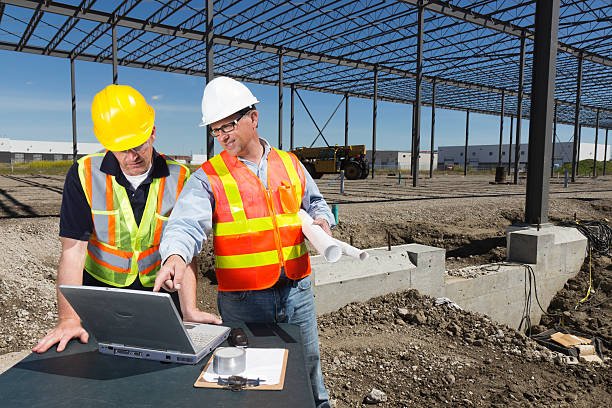
Every industrial project has its own site-specific conditions, such as soil composition, seismic risk, load-bearing capacity, and groundwater levels. During the early estimation stages, it is difficult to get the details about these unforeseen situations because they only become apparent after the excavation begins. So these site-specific issues continuously require the modification and customized solution, which affects the labor requirements, equipment usage, materials quantities, and construction schedule. Adjusting these conditions at the time of construction required design changes, which reduced the accuracy of the original estimates.
Environmental Factors
Sudden environmental emergencies such as earthquakes, floods, storms, and rain also impact the original estimating calculations. Dealing with unforeseen environmental factors requires more budget to reduce the risks for the buildings. Integrating these factors into the original estimating solutions is also a big challenge for professional estimators.
Regulatory Compliances
According to the Association of General Contractors of America, compliance with the regulatory standards is the main concern of every industrial contractor. Meeting the permitting challenge is a major factor that impacts the estimation because compliance requirements directly influence the project cost schedule and resource allocation.
Industrial constructions are subject to various federal, state, and local regulations for environmental impact assessment, wastewater, and other waste disposal. Meeting all these requirements when finalizing the initial drawings for estimating calculation is essential because delays in the approvals can directly impact the procurement process, construction work, and labor mobilization. Further, not getting approval from the government agencies and higher authorities required the design changes, which in itself is an extra cost, forcing the contractor to update the estimate and budgets.
Supply Chain Disruptions
Supply chain disruptions are also one of the major unpredictable factors that affect the industrial initial cost estimation calculations. Industrial contractors usually rely on the global suppliers for steel, aluminum, and MEP systems. When the supply of these materials is disrupted due to any geopolitical tension or natural disasters, contractors have to reschedule the construction work, which directly increases the rented equipment days, tenure for hiring the labor for longer periods, ultimately affecting the initial estimated budget. Moreover, these disruptions also directly impact the pricing of the products. Moreover, the material and petrol prices are volatile and change rapidly, so not receiving these materials on time may lead to more spending on the material and transportation costs, disturbing the original budget.
Change In Scope And Design
Design changes that occur mid-project, whether due to owner preferences, engineering changes, or unforeseen conditions, nearly always add to the cost and time. Many projects proceed to construction without a well-developed plan and require costly mid-project changes, which can have a significant impact on initial estimate calculations. According to AGC’s report, almost two-thirds of contractors experienced at least one project cancelled, postponed, or delayed submission, with funding concerns and increased costs concerns, which are due to the scope changes.
Lack of Technological Knowledge

Keeping yourself updated about new versions of technological estimation software is very critical because they enhance the opportunities to create more accurate and reliable estimates. Those estimators who still rely on the outdated calculation method may deliver inaccurate and poor estimates.
Changing Energy Cost
Construction of industrial projects, especially the manufacturing plants, requires a consistent energy supply. In different states, all grid levels are already occupied, and getting enough electricity at an affordable rate has become very challenging for the construction contractors. You have to wait for the approval or pay a high amount to get the power connection. If you go for the approval process, then it may take 24 to 48 months, which can delay the project schedule, delay the equipment process, and impact the overall cost of the estimation.
Long Project Timelines
Construction projects usually last for 18 to 36 months from estimation to construction. During this period, the prices of the materials may rise, code compliances may change, permit faces may vary, and labor shortages can occur, which make the initial estimation outdated and cause the need for critical reestimation for accurate calculations.
Let’s Get In Touch
Get Construction Cost Estimates Of Your Industrial Projects With One Call!
Best Practises to Cope with Industrial Estimation Challenges
Although these challenges are crucial but not difficult to cope with. A well-planned estimation strategy and professional industrial estimating services can provide reliable budgeting for industrial project cost calculations. Let’s discuss a few successful strategies that can help to generate reliable estimates.
Check Official Prices of Materials
To avoid the material price changes, always check the official PPI data on the US Bureau of Labor Statistics website before integrating the prices for materials in the estimation report.
Check Current Labor Rates
Instead of relying on the subcontractors’ quotation and random resources for labor wages, always check the data for construction employment, wage tracks, and job openings at the US Bureau of Labor Statistics website for their current employment and JOLTS programs.
Check Official Geological Websites
To know the site conditions for any project, you must check the geological survey data, which includes the soil composition data sets and seismic hazard maps available on the US Geological Survey. This helps the estimators to understand the specific condition of the soil or any seismic activity in the region, which can impact the estimations later. They can integrate a specified fund to prepare the land for the construction and manage other environmental hazardous factors.
Check Regulatory Guidelines
Always check the OSHA construction standards and EPA permitting guidance. Moreover, also have a look at any specific guidelines applicable in the regional area where the industrial construction will take place. This helps the estimators to proceed with accurate budgeting and avoid delays. Moreover, engaging with a regulatory consultant at the initial planning phase also makes the execution, while staying within the budget, a cost-effective solution.
Reconcile Designs Where Needed
The US Government Accountability Office (GAO) has published many reports where the change in the design and score here is mentioned as a major factor contributing to the rescheduling of funded construction government projects. So is the case in the private construction sector at the industrial level. So the estimators should discuss the project design and scope in detail with the stakeholders and lock in well before starting the estimation procedure.
Well Procurement Planning
It may sound astonishing that procurement planning is a part of an estimator’s duty. But yes, it is. As the supply chain disruption affects the cost and ultimately the credibility of estimators, it is also advisable for the estimator to discuss the procurement planning and backup suppliers with the relevant persons for the supply chain management, so that any delay in the materials doesn’t affect the estimated budget. The US Census Bureau and the Department of Commerce track the manufacturing and trading data that help the estimators to anticipate the potential bottlenecks.
Use Latest Estimation Tools
Gone are the days when traditional methods were considered accurate for estimations. Nowadays, many machine learning and AI-based software are available, which have made the budget calculation process very easy with automation. Estimating professionals should use the latest tools such as ProEst, Sage Estimating, CostX, Trimble WinEst, Blyebeam Revue, and PlanSwift.
Strategic Power Strategies
Estimators should assess the great capacity to know whether the connection will be available or if it will take time. They should also integrate the energy budget into the base estimating calculations rather than contingencies. Moreover, if the contractors have a chance, they must partner with energy consultants and connect them with the estimators so that, with a collaborative approach, they can develop a realistic cost baseline for power distribution from day one.
Phased Estimating Approach
Pasta industrial projects construction continues for many months, so instead of fixed initial estimates, the estimator should use a phased estimating approach, which allows them to visit the site and update the cost projections with different milestones. Regularly monitoring the project prevents last-minute change orders and overspending. This helped them keep the budget according to the ground realities instead of the outdated assumptions.
Partner With an Experienced Estimating Consultant
Last but not least, if you are not a pro in calculating the estimated budget for an industrial project, then it is suitable for you to take help from an experienced professional who has a strong portfolio in delivering dependable estimates for industrial constructions. A number of estimating forms and freelance estimators are available to provide support for real-world industrial budget calculations.
Design and Bids Firm is also one of them. We have specialized estimators for industrial cost analysis, considering all challenges and integrating the best practises to deliver a legitimate estimation report.
Book A Free Consultation Meeting To Discuss Your Industrial Project Requirements!
Let’s Get In Touch
Get Construction Cost Estimates Of Your Industrial Projects With One Call!
Frequently Asked Questions
What factors go into an industrial construction cost estimate?
An industrial construction cost estimate may contain both direct and indirect costs, such as materials, labor, equipment, site work, permits, engineering costs, insurance, utility connections, and contingency reserves. It also includes other specialized costs such as process equipment, structural steel, and regulatory compliance costs in large-scale facilities.
What are the major causes of cost overruns in the industrial construction industry?
The most common causes are changes in material and equipment costs, lack of skilled staff, labor shortages, and price per hour change, scope changes that take place during construction, permitting delays, lack of technical knowledge, and incomplete site or geotechnical data at the estimating phase.
What tools can increase the accuracy of cost estimating in industrial constructions?
Using the latest tools as Building Information Modeling (BIM), AI-assisted estimation software, and digital takeoff reports, can increase the accuracy of cost estimates.
