

Why Contractors Should Outsource Construction Estimating Services
Outsourcing construction estimating helps US contractors cut overhead by 20–30%, submit more bids faster, and protect profit margins with sharper, expert-driven accuracy without hiring a full-time estimator.
Nine out of ten US construction projects still run over budget, often traced to one point of failure: the estimate. With an estimator shortage, volatile material costs, and AI reshaping takeoffs, 2026 makes outsourcing less optional and more competitive. Let’s explore why outsourcing estimating services is becoming a need for contractors in the USA.
What Is Outsourced Construction Estimating, and Why Is It Booming in 2026?

Outsourced construction estimating means hiring a third-party firm, not an in-house employee, to handle takeoffs and cost estimates. In 2026, estimator shortages, tariff-driven price swings, and AI tools are accelerating adoption.
The model isn’t new, but three 2026-specific forces have pushed it from “nice option” to “competitive necessity.”
- First, the Associated General Contractors of America (AGC) and Sage’s 2026 Construction Hiring and Business Outlook found that 80% of firms are struggling to fill salaried positions, including estimators, while 82% can’t fill hourly craft roles.
- Second, tariffs and input-cost swings have made estimating a moving target. The Associated Builders and Contractors’ analysis of Producer Price Index data showed construction input prices rising 4.8% year-over-year as of March 2026, the sharpest jump since early 2023.
- Third, AI-assisted construction takeoff and estimation tools have matured enough that specialist estimating firms can now process plans dramatically faster than a solo in-house hire ever could, and 61% of firms report using or planning to increase AI investment specifically for functions like estimating, up from 44% the year before, per that same AGC/Sage survey.
Why Are US Contractors Struggling With In-House Estimating Right Now?
Salaried estimators cost $100K–$200K fully loaded, yet remain scarce and idle during slow bid cycles, leaving contractors with fixed overhead that can’t flex with volatile, unpredictable seasonal workload demands.
High Salaries of Estimators
According to the Bureau of Labor Statistics, the median annual wage for cost estimators is $78,740 as of May 2025, with construction-specific roles frequently landing between $75,000 and $150,000+ depending on market and specialization. That’s before you add the real cost of keeping someone on payroll:
| Cost Category | Typical Annual Range |
| Base salary | $75,000 – $130,000 |
| Benefits & payroll taxes (25–35% of base) | $19,000 – $45,000 |
| Estimating/takeoff software licenses | $3,000 – $15,000+ per seat |
| Office space, hardware, training | $5,000 – $10,000+ |
| Fully loaded annual cost | $100,000 – $200,000+ |
Now consider that this cost doesn’t flex with your bid volume. A quiet quarter with two small bids still costs the same as a frantic quarter with fifteen. That fixed overhead is precisely what pay-per-project outsourcing eliminates.
The Estimator Shortage
This isn’t just a wage problem; it’s a supply problem. Associated Builders and Contractors estimates the industry needs 349,000 net new workers in 2026 just to keep pace with demand, and AGC’s workforce data shows that estimating/preconstruction roles are among the hardest salaried positions to fill. Even contractors willing to pay top-of-market salaries are finding the candidate pool thin, especially outside major metros.
Feast-or-Famine Bidding Cycles
Construction demand doesn’t arrive in a straight line. One month you’re bidding two renovations; the next, a multimillion-dollar commercial package lands on your desk. A single in-house estimator, however skilled, has a hard ceiling on how many bids they can turn around in a week, which means your firm’s growth becomes capped by one person’s bandwidth rather than by the market opportunity in front of you.
What Are the Real Benefits of Outsourcing Construction Estimating Services?

Outsourcing converts a fixed, capped-capacity cost center into a flexible, specialized, pay-per-project function, typically cutting estimating overhead by 20–30% while increasing both speed and accuracy. The following are the core benefits of estimation outsourcing.
Lower, Predictable Overhead
Instead of a fixed annual salary regardless of workload, you pay only when you have a bid to price. Industry research consistently points to 20–30% cost savings when firms move estimating from an internal department to an outsourced provider, driven by eliminated salary/benefits spend, shared software costs, and fewer expensive errors that erode margin later.
Faster Turnaround, More Bids Submitted
Bid deadlines don’t move for you. Outsourced estimating firms run multiple estimators in parallel, and many operate across time zones, meaning takeoffs can progress overnight while your internal team sleeps. That capacity lets contractors submit more bids in the same window, and submitting more qualified bids is one of the most direct levers on revenue growth available to a contractor.
Trade-Specific Expertise on Demand
Estimating a structural steel package, an MEP scope, and a light residential remodel each require different pricing knowledge, code familiarity, and supplier relationships. A niche outsourced provider or an outsourcing firm with dedicated trade teams brings depth that a single generalist in-house hire usually can’t match across every division you bid.
Access to Enterprise Software Without Buying It
Tools like CostX, Cubit, Bluebeam, PlanSwift, and AI-assisted takeoff platforms carry real licensing costs, on top of the training time needed to use them well. Outsourced partners spread that cost across every client they serve, so you get the benefit of enterprise-grade tools without the seat license.
Sharper Accuracy That Protects Margin
A dedicated estimator working full-time across dozens of similar projects develops pattern recognition that an internal hire, splitting time between site visits, client calls, and takeoffs, simply doesn’t have the bandwidth to build. Multiple industry sources report 30–40% accuracy improvements when estimating moves to focused external specialists, and in a bid where a single misplaced decimal can turn a “win” into a loss-making job, that gap matters.
Built-In Scalability
Outsourced partners flex up during tender season and back down when things are quiet, without you hiring or laying anyone off. That elasticity is especially valuable for firms entering a new project type; a residential remodeler moving into light commercial work, for instance, can lean on a provider’s existing commercial pricing experience instead of learning that market the expensive way, on a live bid.
More Time on Core Construction Work
Every hour a project manager spends buried in a takeoff spreadsheet is an hour not spent running crews, coordinating subs, or building the client relationships that win the next job. Delegating estimating frees your best people to do the work that actually grows the business.
A Brief Comparison of In-House Estimating Vs Outsourced Estimating
| Factor | In-House Estimating | Outsourced Estimating |
| Cost structure | Fixed salary + benefits (~$100K–$200K/yr loaded) | Pay-per-project, scales with actual workload |
| Software & tools | Company buys and maintains licenses | Included provider already owns the stack |
| Turnaround | Limited by one person’s bandwidth | Multiple estimators, often round-the-clock |
| Accuracy | Solid, but prone to rushed errors under pressure | Typically closer, focused, specialized attention |
| Scalability | Fixed headcount regardless of bid volume | Flexes up or down with demand |
| Bid capacity | Limited bids per week | Higher volume of bids submitted |
| Data control | Full internal control | Managed via NDAs and secure platforms |
| Best fit | High-volume, repeat-project large contractors | Small, mid-sized, and specialty contractors; overflow for large firms |
Are There Downsides to Outsourcing Estimating and How Do You Avoid Them?
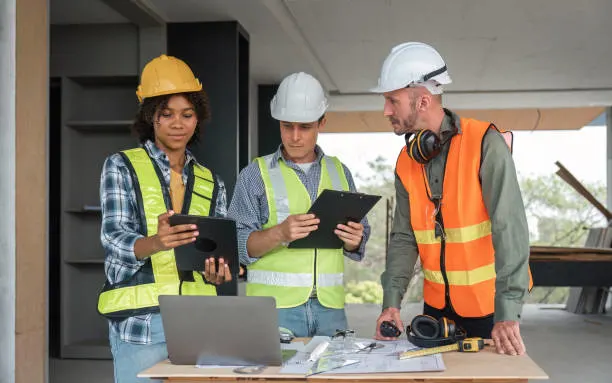
Outsourcing carries real risks: communication gaps, data security, less oversight, quality variance, and dependency. But each is manageable through NDAs, documented revision policies, itemized backup reports, and a low-stakes trial project first.
Communication gaps
Revisions late in the bid cycle can get lost if a provider isn’t responsive. To overcome this, always choose a partner with a named point of contact and a documented revision-turnaround policy before you sign anything.
Data Security Concerns
You’re handing over drawings, pricing strategy, and sometimes proprietary methods to a third party which you do not know in detail. However, this is also manageable with a signed NDA, encrypted file transfer, and ask directly how they store and delete project data after delivery.
Reduced Day-to-Day Oversight
You’re not watching the estimate get built line by line, due to which you do not have data about the estimation process step by step. To resolve this, you can ask for itemized backup documentation with every estimate, quantities, unit costs, and assumptions, not just a final number.
Quality Variance Between Providers
Not every outsourced estimator is equally good, and pricing pressure can tempt some firms to cut corners. To save your money and end up with a good professional, always start with a single low-stakes trial project before committing to a long-term relationship, and ask for sample estimates and references up front.
Dependency Risk
Leaning entirely on one external provider can leave you exposed if their capacity or quality slips. However, many contractors keep one internal reviewer who sanity-checks outsourced numbers before they go into a bid, especially for large jobs.
How Is AI Changing Outsourced Construction Estimating in 2026?
AI now automates takeoffs and predicts material pricing in real time, cutting estimating time dramatically, yet human estimators still handle judgment calls, scope interpretation, and final sign-off on every accurate bid. AI hasn’t replaced construction estimator professionals; it’s changed what a good estimating team can deliver on a deadline.
Three shifts matter most for contractors evaluating a partner in 2026. Let’s discuss them in detail
AI-Assisted Takeoffs
Machine-learning tools can now auto-detect and measure quantities directly from digital drawings, cutting the mechanical portion of a takeoff from hours to minutes. This is a huge part of why the AGC/Sage 2026 Outlook found 23% of firms already applying AI specifically to estimating, with more planning to adopt it.
Predictive Material Pricing
Given how volatile lumber, steel, and other input costs have been, remember that 4.8% year-over-year jump in construction input prices reported in March 2026, predictive pricing models that track real-time supplier and commodity data are becoming a genuine differentiator between estimating providers, not just a marketing claim.
AI-Enhanced BIM, CAD, and Shop Drawing Integration
Estimating no longer happens in isolation from design. AI-powered BIM platforms now sync directly with CAD drafting and shop drawing workflows, auto-flagging quantity mismatches, clash conflicts, and scope gaps before a number ever reaches your bid. This tight integration means estimators catch costly errors, missing rebar, conflicting MEP runs, and miss measured openings at the drawing stage rather than mid-construction, making these tools essential differentiators for any outsourced partner worth hiring in 2026.
What AI still can’t do?
Site-condition judgment calls, scope interpretation on ambiguous drawings, and relationship-based supplier negotiation still require a human estimator’s experience. The best outsourced providers in 2026 use AI to handle volume and speed, while keeping a licensed or credentialed estimator responsible for final sign-off. When you’re vetting a partner, ask specifically how AI and human review are split in their process. A provider that can’t answer that clearly is worth a second look.
Need a certified outsourcing partner with AI-driven precision?
Talk to Design and Bids’ experts today. We will streamline your takeoff process and help you win more bids!
Which Contractors Benefit Most From Outsourcing?
| Contractor Type | Best-Fit Model | Why |
| Small contractors/startups (<15 bids/month) | Fully outsourced | A full-time estimator’s fixed cost rarely pencils out against irregular bid volume |
| Specialty subcontractors (concrete, electrical, drywall, MEP) | Outsourced, trade-specialized provider | Niche pricing knowledge beats a generalist internal hire |
| Fast-growing mid-sized GCs | Hybrid model | Internal oversight on core bids, outsourced overflow during tender spikes |
| Firms entering a new market (e.g., residential → light commercial) | Outsourced, market-specific provider | Avoids learning a new pricing environment through costly trial and error |
| Large, high-volume contractors with repeat project types | In-house core team + outsourced overflow | Institutional knowledge pays off at scale, but peak season still needs backup capacity |
How Much Does Outsourced Construction Estimating Cost?
Pricing varies by provider, project complexity, and region, but most US-based construction estimating services fall into one of three structures:
| Pricing Model | How It Works | Best For |
| Per-project / flat fee | One quote per bid package, based on scope and drawing complexity | Occasional bidders, smaller residential or trade-specific jobs |
| Percentage of project value | Fee scales as a small percentage of estimated construction cost | Larger commercial or industrial bids |
| Monthly retainer / dedicated capacity | Fixed monthly fee for guaranteed estimator hours or bid volume | Contractors bidding frequently who want predictable access without full-time payroll |
As a rule of thumb, even after paying a provider’s fee, contractors typically still land inside that 20–30% savings range compared with carrying a full-time salaried estimator because the fee only applies when there’s actual work to price, not twelve months a year regardless of bid volume.
How Do You Choose the Right Estimating Partner?
Not every outsourced estimating firm delivers the same value, so treat this decision with the same diligence you’d apply to hiring a key employee.
Questions to Ask Before You Sign
- Do they have direct experience with your project type? Residential, commercial, and industrial pricing assumptions differ significantly. Ask for sample estimates in your specific niche.
- What’s their quality-control process? The strongest providers have a second estimator independently check every set of numbers before it reaches you.
- What software and data sources do they use? Confirm they’re working from current, region-specific material and labor pricing, not a stale internal spreadsheet.
- What’s their revision policy? Late-stage document changes are common in real bidding. A provider who charges heavily for revisions can quietly erase the savings that made outsourcing attractive in the first place.
- How do they handle confidentiality? Ask to see their standard NDA and data-handling policy before sharing any drawings.
- What does a trial project look like? The fastest way to test fit is a single, lower-stakes bid before committing to an ongoing relationship.
What Does the Outsourcing Process Actually Look Like, Step by Step?
From scope handoff and clarifying questions to takeoff, pricing, internal quality checks, and delivery with full backup documentation. Outsourced estimating follows a structured six-step process ending in your review and approval.
Scope Handoff
You share drawings, specifications, and bid deadlines with the provider, along with any specific pricing assumptions you want reflected.
Kickoff and Clarification
A reputable estimator reviews the documents and follows up with clarifying questions before pricing starts. A sign they’re not just running a template.
Takeoff and Pricing
The provider performs the quantity takeoff, applies current material and labor rates, and builds in contingency for risk factors.
Internal Quality Check
A second estimator on their team reviews the numbers before delivery.
Delivery with Backup Documentation
You receive the final estimate along with line-item breakdowns, assumptions, and supporting notes, not just a bottom-line figure.
Review and Revision
You and your team review the numbers, flag anything that needs adjustment, and the provider updates the estimate ahead of your bid deadline.
Final Verdict
Estimator salaries and shortages are rising, material costs remain volatile, and AI-enabled outsourced providers are closing the accuracy and speed gap faster than most in-house teams can keep pace with alone. Outsourcing construction estimating isn’t a signal that a contractor can’t afford an internal team. Increasingly, it’s the strategic choice contractors make once they’ve done the math on cost, speed, and bid-win capacity.
Whether you start with a single overflow project during your next bidding crunch or move your entire estimating function externally, the underlying logic holds: precise, well-documented estimates protect your margin, and the contractors moving fastest in 2026 are the ones who stopped treating estimating as a cost to minimize and started treating it as a capability worth buying at expert level.
Frequently Asked Questions
Is outsourcing construction estimating actually cheaper than hiring in-house?
For most small and mid-sized contractors, yes. Industry data points to 20–30% savings once you account for the salary, benefits, software licenses, and training costs a full-time estimator requires- costs that don’t disappear during slow bidding months.
Will an outsourced estimator understand my specific project and local market?
A quality provider takes time upfront to review your drawings, specs, and site conditions, and maintains ongoing communication through the bidding process rather than disappearing until the deadline. Ask for regional pricing sources during vetting to confirm local accuracy.
Is my project data safe with an outsourced estimating firm?
Reputable providers operate under signed NDAs, encrypted file transfer, and clear data-retention policies. Treat this the same way you’d treat any trusted vendor relationship; confirm the specifics before sharing sensitive drawings.
Can large commercial contractors benefit from outsourcing, or is it just for small firms?
Large firms benefit too, typically by using outsourced partners to absorb overflow during peak bidding seasons while keeping core estimating in-house, a hybrid approach rather than a full replacement.
How fast can I get an estimate back from an outsourced provider?
Turnaround ranges from a few business days for straightforward projects to a couple of weeks for complex commercial packages, though providers working across multiple time zones can often compress that timeline further.
Does outsourcing mean I lose control over my final bid numbers?
No, you still review, adjust, and approve every estimate before it goes into a bid. The difference is that a good outsourced estimate typically comes with more supporting documentation (itemized quantities, unit costs, assumptions) than a rushed internal one, giving you more visibility, not less.
