
Home Renovation Cost Estimator: How to Calculate Remodeling Expenses
You calculate remodeling expenses by adding up four core categories, including materials, labor, permits, and a contingency reserve, then adjusting that total for your home’s size, age, location, and the quality level you choose. It sounds simple on paper, but most homeowners get the number wrong because they price the visible work and forget everything happening behind the walls.
This guide explains exactly how professionals build a renovation budget, what a realistic cost breakdown looks like room by room, and which hidden expenses catch homeowners off guard. You will also get real 2026 pricing benchmarks, practical formulas, and a framework for building a home renovation cost estimator you can trust before you sign a contract.
Why a Reliable Cost Estimate Matters More Than a Ballpark Number
A vague idea of “Somewhere around $30,000” is not a budget. It is a guess wearing budget clothes. Homeowners who actually sit down and calculate their remodeling costs tend to come out ahead in three specific ways that are mentioned below:
- They can compare contractor bids fairly. Two quotes that both say “$45,000” can represent completely different scopes of work. One might include permits and a design allowance, while the other excludes all three.
- A detailed estimate also protects your home renovation financing and provides a complete cost breakdown.
- Lastly and most importantly, it keeps you from running out of money halfway through demolition, which is one of the most common and stressful ways a renovation goes wrong.
According to Harvard University’s Joint Center for Housing Studies, homeowner spending on remodeling and repairs is projected to reach roughly $522–524 billion in 2026. This high record reflects just how much contractor demand has stayed elevated across the country. This high investment also makes it critical for homeowners to get a reliable cost estimate for their renovation project.
The Basic Formula: How to Calculate Remodeling Costs
Every renovation cost calculator out there runs on the exact same math underneath. We are going to outline this formula in this section. This formula lets you double-check any estimate a contractor hands you:
Total Cost = Materials + Labor + Permits & Fees + Design/Planning + Contingency Reserve
Here is what each piece actually covers.
Materials
Materials usually eat up 35% to 50% of your total budget. This range depends on how premium you want to go. From flooring material to the type of required fixtures, it is all in here. This is also where you have to be clear about what exactly you want in your renovation project. You can shift your budget by thousands of dollars without touching the footprint of the project at all by simply choosing a higher-end material.
Labor
Labor is almost always the biggest single expense. On remodeling projects with detailed electrical or carpentry work, it can cost 50% to 65% of your total budget. Yes, an experienced contractor charges more per hour. But they also make fewer mistakes, and mistakes on a renovation are expensive to fix twice.
Permits and Inspections
Most cities charge permit fees based on the declared value of your project (usually 1% to 2% of the total). Structural work and plumbing changes almost always need a permit. Skipping this to save a few hundred bucks can void your homeowner’s insurance and cause headaches when you sell the house down the road.
Design and Planning
Beyond a simple cosmetic refresh, you will probably need a designer or architect involved. Budget 5% to 15% of the construction cost for this on larger jobs. A basic kitchen touch-up usually doesn’t need it at all.
Contingency Reserve
This is the line item people skip most often, and the one they regret skipping most often too. Set aside 10% to 20% of your total budget for the stuff you can’t see coming. If demolition doesn’t turn up anything bad, you keep the extra money. If it does, you are covered.
2026 Renovation Cost Benchmarks Worth Knowing
Before you build your own numbers, it helps to know where the national market actually sits right now. Your project will land somewhere different depending on region and scope, but these figures give you a reference point.
The average remodeling cost for a home between 1,250 and 1,600 square feet came in at $52,275 in 2026, with most projects falling between $19,500 and $88,400. Per square foot, cosmetic updates run $15 to $60, while a full gut renovation with structural changes climbs to $60 to $150.
Separately, a median single-project cost is just $2,800, while it’s pulled up to a mean of $6,346 by the big structural jobs. That gap matters. If you are planning a single-room refresh, you are likely closer to the lower number. If you are gutting a house, the average won’t tell you much.
Typical Home Renovation Cost Breakdown by Room
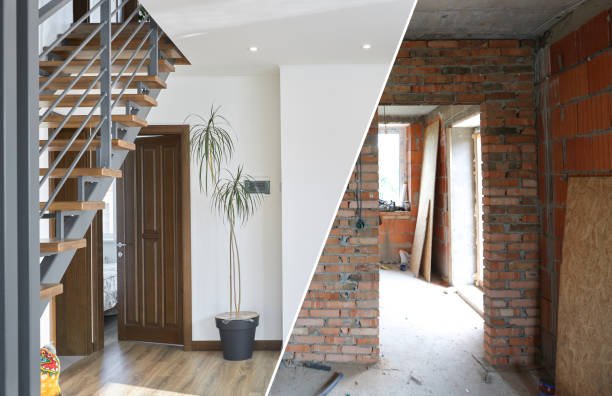
Room-level pricing is where most people start their research, and it is the fastest way to sanity-check a quote. Here is a realistic 2026 breakdown based on current national data.
| Project | Typical Cost Range | Cost Drivers |
| Kitchen remodel (mid-range) | $25,000 – $60,000 | Cabinetry, countertops, appliances, electrical |
| Kitchen remodel (high-end) | $60,000 – $150,000+ | Custom cabinetry, structural changes, premium appliances |
| Bathroom remodel (standard) | $15,000 – $35,000 | Plumbing, tile, vanity, fixtures |
| Primary suite bathroom | $40,000 – $80,000 | Layout changes, custom shower, dual vanities |
| Bedroom remodel | $4,000 – $12,000 | Flooring, paint, lighting, trim |
| Living room refresh | $5,000 – $10,000 | Flooring, paint, lighting |
| Basement finishing | $25,000 – $75,000 | Framing, insulation, egress, flooring |
| Whole-house remodel (1,250–1,600 sq ft) | $19,500 – $88,400 | Scope, material grade, structural work |
| Window replacement (per window) | $450 – $1,200 | Frame material, energy rating |
These numbers cover labor and materials together. Local labor rates and how easy it is to get materials in your area can push any of these ranges up or down by 20% to 40%.
Cost Breakdown by Renovation Category
It is also important to see where your money goes across the phases of a renovation, no matter which room you are tackling.
| Category | Share of Total Budget | What Is Included |
| Labor | 50% – 65% | General contractor, electricians, plumbers, carpenters, painters |
| Materials & finishes | 25% – 40% | Cabinetry, flooring, countertops, fixtures, paint |
| Permits & inspections | 1% – 3% | Building permits, code inspections, plan review |
| Design & planning | 5% – 15% | Architectural drawings, interior design, consultations |
| Demolition & disposal | 3% – 8% | Debris removal, dumpster rental, hazardous material handling |
| Contingency reserve | 10% – 20% | Unexpected structural, plumbing, or electrical repairs |
What Drives Renovation Costs Up or Down
No two renovation projects land on the same number, even for homes that look identical from the street. Several variables shift the final price significantly. Look at the most common cost drivers for a renovation project.
Square Footage and Project Scope
More square footage means more materials and labor hours required to complete the project. A larger kitchen is expensive because it often requires additional electrical circuits, more cabinetry runs, and more finish work. All these factors compound the cost beyond a simple per-square-foot multiplier.
Home Age and Structural Condition
Older homes hide various financial surprises. Houses that were built before the 1980s frequently have outdated wiring, old plumbing, and asbestos insulation that is hard to change or upgrade. Once the walls come open, these issues stop being optional and start being mandatory line items.
Material Quality and Labor Rates
Material quality is another major cost driver in remodeling projects. Choosing between laminate and solid hardwood or stock cabinets and custom millwork can swing a single room’s cost by 40% or more. Mid-range materials usually offer the best deal: durable enough to last, without paying a premium for a brand.
Similarly, labor rates affect the overall cost of the renovation project. Skilled trade labor has stayed tight in a lot of regions, and that keeps hourly rates elevated. The National Association of Home Builders expects residential remodeling activity to grow about 3% in inflation-adjusted terms in 2026, and notes that material price growth has stayed above 3% year-over-year since June 2025. In simple words, labor and materials are both still creeping up, not cooling off.
Geographic Location
Construction costs vary significantly with the area of your projects. A kitchen remodel that costs $25,000 in a smaller Midwestern city can run $35,000 to $40,000 in a major coastal metro because of higher labor rates and tighter contractor availability.
Let’s Get In Touch
Skip the guesswork, get an expert renovation estimate from Design and Bids.
How Regional Location Changes Your Numbers
Two identical kitchen remodels with the same materials and same square footage can end up tens of thousands of dollars apart purely because of where the house sits. Local labor rates, permit fees, contractor demand, and even how far materials have to ship all play into the final price.
NAHB’s state-level data shows California, Texas, and Florida together make up more than 20% of national remodeling activity, which keeps demand higher there than in slower-growth states.
As a rough guide:
| Market Type | Typical Cost Adjustment vs. National Average |
| Major coastal metro (e.g., San Francisco, New York, Boston) | +25% to +45% |
| Mid-size metro (e.g., Denver, Nashville, Austin) | +5% to +15% |
| Smaller city or suburban market | Roughly at national average |
| Rural area | -10% to -20% |
Step-by-Step: Building Your Own Renovation Cost Estimate
Here is how to put together your own numbers before you ever call a contractor.
Start with the Exact Scope
Start by writing down every piece of the project in detail. Don’t just say “remodel the kitchen,” but write exact details like replace cabinets, install quartz counters, add an island, update lighting, and repaint. A vague scope gets you a vague number, which is why describing every required task for your job is critically important.
Price the Specific Materials You Want
After writing details of each scope, go to suppliers or browse online for the actual products, not just the category. For instance, Quartz countertop costs you $50 a square foot or $150. It all depends on the brand and quality of the material. So, be clear and specific when you choose the material for your remodeling tasks.
Estimate Labor Using Local Rates
The next step is getting the accurate labor rates required to complete your project. Contractors usually price labor by the hour, by the square foot, or as a percentage of material cost. It is good to ask two or three local pros for ballpark numbers before you settle on anything.
Add Permits and Inspection Fees
Adding permits and inspection fees in your estimate is important to get an accurate total. Check your city or county building department’s website for the fee schedule for these permits. Most are a percentage of the declared project value.
Layer in Your Contingency
A contingency percentage can make or break your overall estimate. Adding this reserve helps you to avoid unnecessary delays and financial surprises during the completion of the project. Take your subtotal and multiply by 1.10 to 1.20. That is your real number. Skip this step, and you are setting yourself up to run out of money.
Get Multiple Quotes and Compare Line by Line
Once you have your own estimate, ask at least three licensed contractors for itemized bids. If one comes in way under your number, ask what is missing. It is rarely a bargain; it is usually a gap in scope.
Follow these steps, and you will have a solid, realistic estimate for your renovation. But if the numbers still feel uncertain, don’t guess. Get renovation estimating services from Design and Bids, which offer accurate and submission-ready estimates, so you can move forward with numbers you can actually trust.
Hidden Costs People Almost Always Underestimate
Even a careful budget can miss expenses that only show up once the work actually starts. These are the ones that trip people up most.
- Temporary housing or eating out more during a kitchen or whole-home renovation. This can add $1,500 to $5,000 depending on how long the project drags on.
- Storage for furniture and belongings when several rooms are torn up at once.
- Structural repairs found mid-demolition that have to be dealt with before finish work can continue.
- Material price swings, especially lumber and specialty finishes, if you have not locked in pricing ahead of time.
- Code-driven upgrades, where fixing one system legally requires bringing a neighboring system up to current code too.
- Change orders, which happen when homeowners tweak the design mid-project. These almost always cost more than deciding upfront would have.
Sample Cost Estimate: A Realistic Kitchen Remodel
To see the formula in action, here is how a mid-range 200-square-foot kitchen remodel might break down using the framework above.
| Line Item | Estimated Cost |
| Cabinetry (semi-custom) | $12,000 |
| Countertops (quartz) | $4,500 |
| Appliances (mid-range package) | $6,000 |
| Flooring | $3,000 |
| Electrical & plumbing labor | $5,500 |
| General contractor labor | $7,000 |
| Permits & inspections | $650 |
| Design consultation | $1,200 |
| Subtotal | $39,850 |
| Contingency reserve (15%) | $5,978 |
| Total Estimated Budget | $45,828 |
This mirrors current market data closely, as mid-range kitchen remodels nationally fall in the $25,000 to $60,000 range. This sample lands comfortably inside that window once the contingency is included.
Let’s Get In Touch
Skip the guesswork, get an expert renovation estimate from Design and Bids.
Using a Home Renovation Cost Estimator Effectively
At Design and Bids, we recommend using online estimators as an initial planning tool, then moving to a detailed project-specific estimate when you are ready to request contractor bids.
What they are good for: setting an initial ballpark, comparing the relative cost of different project types, and helping you decide what’s financially realistic before you invest time contacting contractors.
What they can’t do: account for your home’s specific structural condition, local permit costs, current material pricing at the moment you buy, or the premium (or discount) a specific contractor charges based on their schedule and reputation.
Treat any calculator output as a starting range, not a quote. The gap between an online estimate and an actual contractor bid is normal (usually 15% to 30%), and it narrows the more specific detail you feed into the tool.
What Financing Does to Your Budget
How you plan to pay for the work shapes how you should build your estimate in the first place. If you are using a home equity loan or HELOC, you are working with a fixed limit, so your contingency needs to fit inside that ceiling instead of stacking on top of it. Cash gives you more room to absorb surprises. Personal loans or credit-based financing tend to carry higher interest, which makes it smarter to trim the scope than to stretch the loan.
If you are financing any portion of the project, get pre-approved before finalizing your scope. Knowing your actual borrowing capacity prevents the common mistake of designing a $70,000 kitchen around a $50,000 loan.
Common Budgeting Mistakes to Avoid
You can get an accurate construction cost estimate for your project if you avoid some small mistakes that affect the overall budget. Here is where budgets usually go wrong.
- Setting a budget before defining the scope, rather than the other way around.
- Choosing a contractor based solely on the lowest bid without confirming what is included.
- Skipping permits to save money, which risks fines and insurance complications later.
- Failing to set aside a contingency fund of at least 10%.
- Making design changes mid-project instead of finalizing decisions before demolition begins.
- Not verifying contractor licensing and insurance, which can leave you liable for on-site accidents.
Conclusion
Calculating remodeling expenses accurately comes down to breaking the project into its real components rather than guessing at a single number. When you understand what drives costs up, from your home’s age to your material choices to your zip code, you stop being surprised by contractor quotes and start negotiating from an informed position.
Use online estimators for a starting range, but always confirm with itemized bids from licensed professionals before committing. Cross-check every bid against the benchmarks above, and don’t sign anything until your contingency line is clearly written into the contract.
With a realistic budget in hand, including that all-important reserve fund, you can move forward with a renovation plan built to survive contact with reality, not just look good on paper.
Frequently Asked Questions
How do I calculate the total cost of a home renovation?
Add up materials, labor, permits, design fees, and a 10–20% contingency reserve. This five-part formula covers nearly every renovation project regardless of size.
What percentage of a renovation budget should go to labor?
Labor typically consumes 50% to 65% of the total project cost, especially for projects involving electrical, plumbing, or structural work.
How accurate is an online home renovation cost estimator?
Online estimators are useful for an initial ballpark but typically run 15% to 30% below or above actual contractor bids, since they can’t account for your home’s specific condition or local pricing.
Why did my renovation cost more than the original estimate?
Most overages come from hidden structural issues discovered during demolition, mid-project design changes, or an insufficient contingency fund set aside at the start.
Should I get multiple contractor quotes before finalizing my budget?
Yes. Comparing at least three itemized quotes helps you spot unusually high or low bids and confirms which scope items are included in each one.
